
CNC Turning Capabilities
Contour Tool’s CNC turning centers deliver the accuracy, consistency, and single-setup efficiency our customers depend on, handling everything from cylindrical components to complex multi-feature turned parts. Our 4-axis and 5-axis machines with live tooling allow us to mill, drill, and turn in a single setup, reducing handling time, improving consistency, and shortening lead times. Whether your part calls for straight turning, taper turning, or intricate multi-feature geometries, we dial in the right cutting parameters and tooling for every job, every material, and every tolerance requirement.
Horizontal Mill/Turn Centers
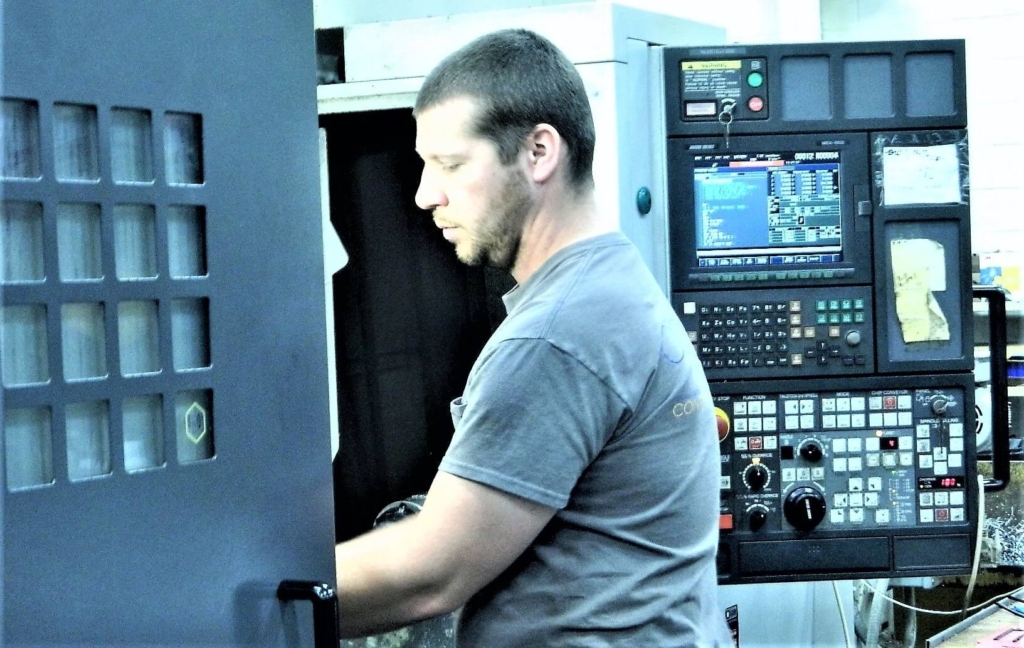
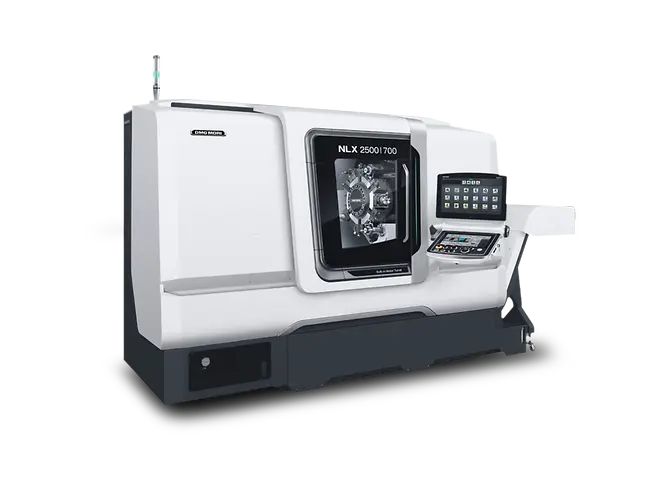
- (2) DMG Mori-Seiki NL2500S
- 4 axis capability
- Live Tooling for Face and Cross drilling and milling
- 10” diameter Main Spindle and 6” diameter Sub-Spindle capacity
- 3” diameter thru the spindle bore
Horizontal Mill/Turn Centers
- (2) DMG Mori-Seiki NL2500
- 4 axis capability
- Live Tooling for Face and Cross drilling and milling
- 10” diameter Main Spindle and Tail Stock
- 3” diameter thru the spindle bore
Horizontal Mill/Turn Centers
- (1) Hitachi-Seiki Super Hi-Cell
- 5 axis capability
- Live Tooling for Face and Cross drilling and milling
- 10” diameter Main Spindle and Tail Stock
- 3” diameter thru the spindle bore
- Mini-Sprint Bar feeder
- 40 tool capacity
CNC Turning Process Optimization
CNC turning process optimization has emerged as essential to producing precise, reliable turned parts — and it’s something Contour Tool takes seriously on every job. . By using advanced CNC turning machines, lathes and turning centers, we can transform our turning operations into a reliable, high-precision process that can serve our customers across multiple industries. The journey begins with selection of the right cutting tools for each machining application because the right tooling not only improves finished component quality but also extends tool life to keep costs in check, which we can then pass along to our customers.
In CNC turning operations, parameters like cutting speed, feed rate, and depth of cut are carefully dialed in for each job and each material. Whether performing straight turning for cylindrical parts or taper turning for more complex geometries, getting those parameters right is what separates a good part from a scrapped one. Our turning centers are equipped to handle a wide range of part geometries and materials, with live tooling capability that allows us to mill, drill, and turn in a single setup — reducing handling time and improving accuracy.
As we stocked our machine shop, we lean into our DMG Mori-Seiki NL2500S or our Hitachi-Seiki Super Hi-Cell, The DMG Mori-Seiki NL2500S has both a main spindle and a sub-spindle, which allows front and back work to be completed in a single setup. sub-spindle. This reduces handling, improves consistency, and shortens lead times. Through ongoing process refinement, we can minimize defect rates, reduce material waste exposure, and maintain the tight tolerances that our customers require.
This commitment to continuous improvement not only helps us craft parts with high quality and reliability, but it also but also helps us supply components to a broader spectrum of industrial applications. More importantly, it delivers greater value to the customers who depend on us to get it right the first time and every time.
CNC Turning Capabilities
Horizontal CNC Turning Centers
- (2) DMG Mori-Seiki NL2500S
- 4 axis capability
- Live Tooling for Face and Cross drilling and milling
- 10” diameter Main Spindle and 6” diameter Sub-Spindle capacity
- 3” diameter thru the spindle bore
Horizontal CNC Lathes
- (2) DMG Mori-Seiki NL2500
- Live Tooling for Face and Cross drilling and milling
- 10” diameter Main Spindle and Tail Stock
- 3” diameter thru the spindle bore
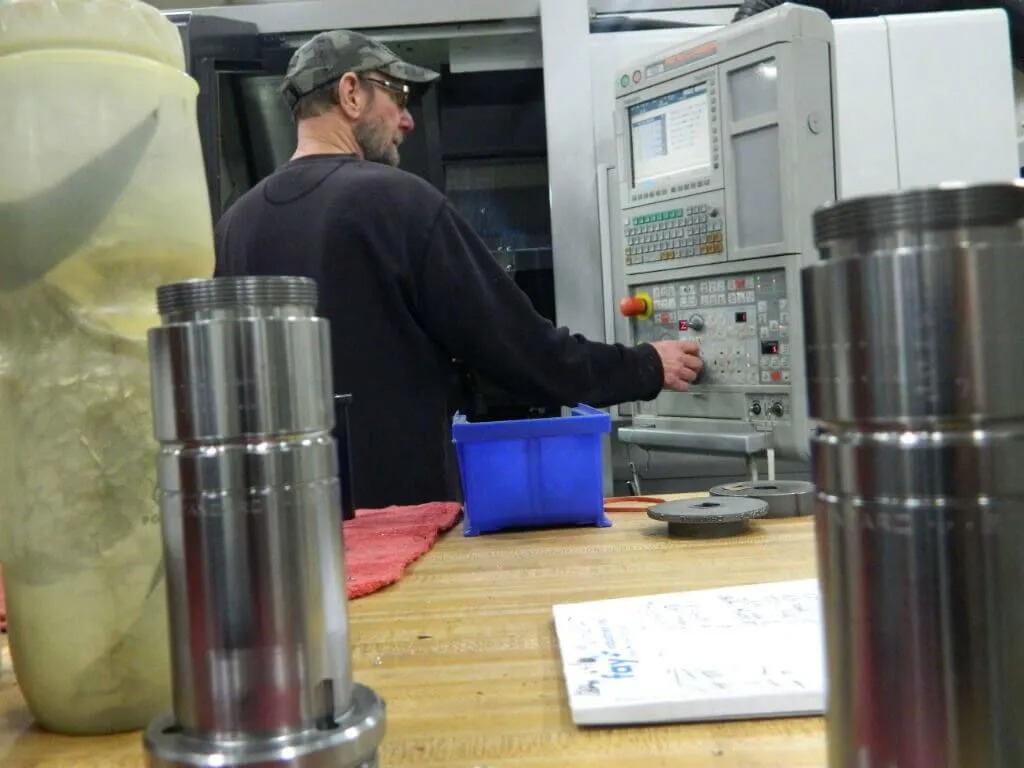
Machining Smaller Parts on our NLX 2500
Horizontal CNC Milling/Turn Centers
- (1) Hitachi-Seiki Super Hi-Cell
- 5 axis capability
- Live Tooling for Face and Cross drilling and milling
- 10” diameter Main Spindle and Tail Stock
- 3” diameter thru the spindle bore
- Mini-Sprint Bar feeder
Additional Capabilities and Services
CNC Precision Machining
View CapabilitiesValue Added Services
View ServicesInventory Management
Learn MoreQuality
Learn MoreProduct Gallery
View GalleryWhat is CNC turning?
CNC turning is a precision machining process where a workpiece rotates at high speed while a cutting tool moves along its surface to remove material and shape it into the desired form. The process is controlled by computer-generated instructions derived from a CAD model, which ensures consistent accuracy across every part produced. At Contour Tool, our CNC turning centers — including 4-axis and 5-axis machines with live tooling — allow us to handle complex geometries, tight tolerances, and both front and back work in a single setup.
What is the difference between CNC milling and CNC turning?
The key difference is how material is removed. In CNC turning, the workpiece rotates while the cutting tool remains relatively stationary — making it ideal for cylindrical or round parts. In CNC milling, the workpiece is stationary while the cutting tool rotates and moves across it, allowing for more complex shapes, contours, and features. Many precision parts actually require both processes, which is why Contour Tool offers full milling and turning capabilities under one roof.
What is the process of turning?
Turning starts with securing the workpiece in a rotating chuck or spindle. As it spins, a cutting tool moves along the surface to remove material and achieve the target diameter, profile, or feature. Parameters like cutting speed, feed rate, and depth of cut are carefully set for each job — because getting those variables right is what determines the accuracy and surface finish of the finished part.