
CNC Milling Capabilities
Contour Tool’s CNC milling capabilities combine advanced multi-axis equipment with decades of precision manufacturing expertise. Our CNC milling capabilities deliver complex geometries, tight tolerances, and consistent quality for aerospace, medical, automotive, and defense applications.
Horizontal Machining Centers
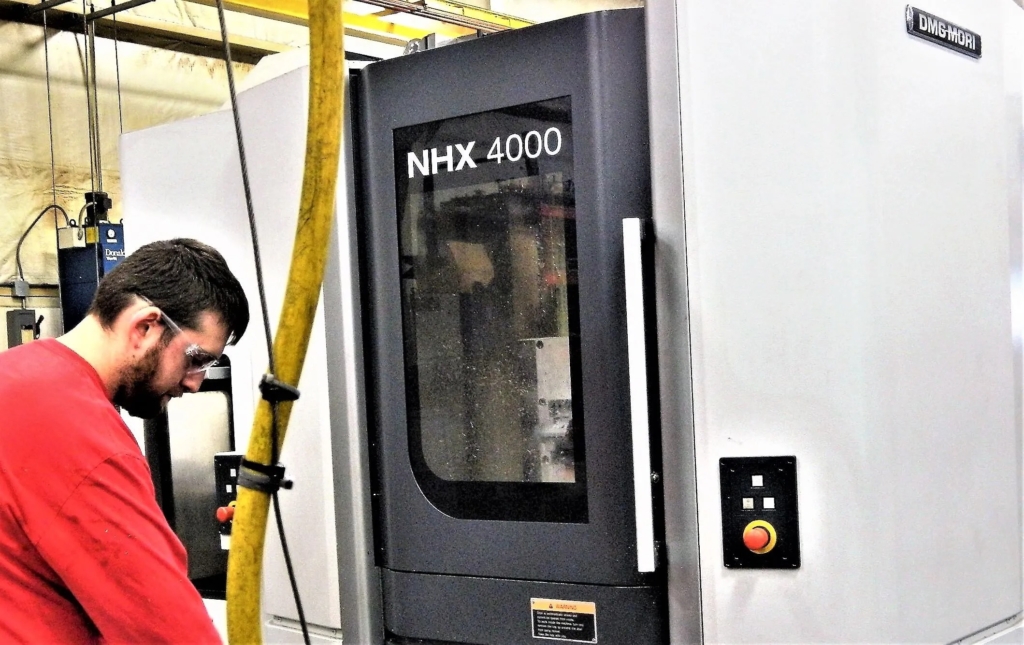
- (5) Mori-Seiki and DMG Mori-Seiki machining centers
- 4 axis capability
- 60 tool capacity
- 16” x 16” x 16” working envelope
- Full 4th axis
- Touch Probing
- Automatic Pallet Changers
Vertical Machining Centers
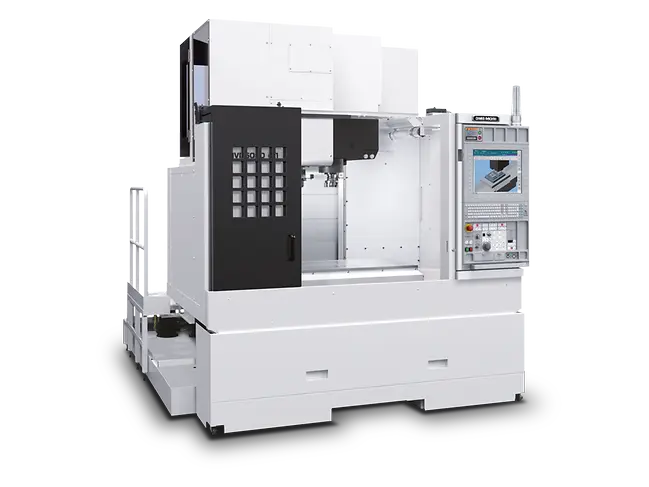
- (1) Mori-Seiki DV5100 machining center – (1) Mori-Seiki VM40 machining center
- 3 axis capability
- 30 tool capacity
- 20” x 40” x 12” working envelope
- Automatic Pallet Changers
Vertical 5 AXIS Machining Centers
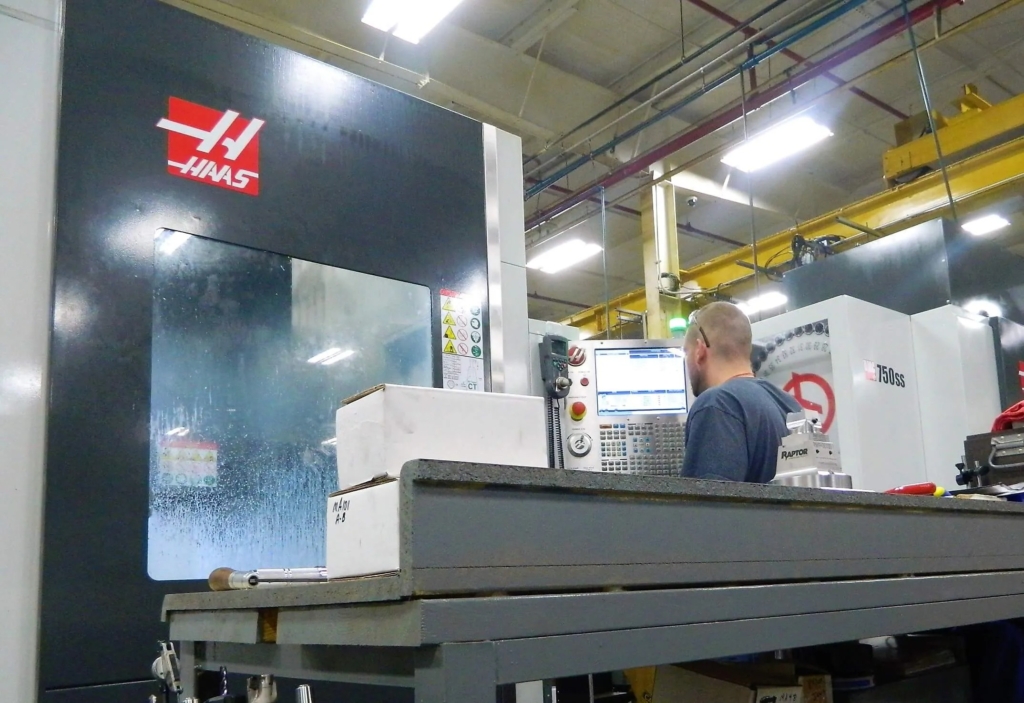
- (2) Haas UMC750 vertical machining centers
- Full 5 face machining capability
- 40 tool capacity
- Touch Probing
CNC Milling Optimization
CNC milling is a manufacturing process that uses computer numerical control technology to deliver precision machined parts and components. Unlike traditional manual milling methods, CNC milling systems use programmatic computer-driven control to execute precise material removal operations, enabling manufacturers to consistently deliver the complex geometries and intricate specifications required to maintain a competitive edge in today’s market.
This automated approach has become a hallmark for organizations seeking to differentiate capabilities through proven precision capabilities and validated manufacturing excellence. Contour Tool embraces modern technologies and has steadily built an equipment portfolio that includes CNC milling machines to provide a high level of excellence, dependability and reliability for our customers’ parts and components.
The strategic advantages of CNC milling extend far beyond basic automation to address critical market pressures across multiple industrial sectors. Through advanced multi-axis control, manufacturers achieve the repeatable precision and quality outcomes required by aerospace, medical, and automotive customers.
Even minimal deviations can compromise safety-critical applications and regulatory compliance, making CNC milling’s accuracy essential, not optional. Furthermore, CNC milling dramatically reduces labor-intensive processes and eliminates human-error , delivering operational efficiency and consistent quality outcomes that drive sustainable market leadership and customer confidence.
Our CNC milling capabilities expand our manufacturing capabilities to help us produce everything from standard components to highly specialized parts with the tight tolerances. Its proven capability to handle diverse material, while delivering exceptional precision, makes CNC milling a go-to solution for customers that need complex parts done right, on time and to spec.
CNC Milling Process
The CNC milling process transforms a digital design into a finished, precision-machined component; a process where every step matters. It starts with computer-aided design (CAD), where designers define the part geometry, dimensions and tolerances the finished component must meet. This digital model is then fed into computer-aided manufacturing (CAM) software, that generates precise instructions for the CNC machine. The setup phase includes advanced milling platform preparation, precision cutting tool selection, and workpiece positioning. Depending on part geometry and job requirements, we use vertical milling where the spindle approaches the workpiece from above or horizontal milling where the spindle runs parallel to the worktable. The machine configuration depends on part complexity, material and the operations required to hit spec.
During machining, our CNC milling machines execute the programmed toolpaths, removing material and shaping the part to exact market specifications. Using three, four, or five-axis control, we can machine complex geometries and intricate features in fewer setups — reducing handling time and improving accuracy. A recent acquisition, our Haas UMC750 5-axis centers, for example, enable us to machine parts with complex geometries and intricate patterns with precision and repeatability. Throughout machining, our machines maintain tight tolerances, ensuring every finished part or component meets its original design intent.
Following machining, finished components undergo inspection to verify dimensional accuracy and confirm it meets tolerances. For our aerospace and medical device customers, there is no margin for error, and our inspection process reflects that.
Whether you need a small run of specialty components or a high-volume production run, CNC milling gives us the accuracy, repeatability and turnaround times to keep your project on track and in line with the most stringent quality standards.
The integration of CAD, CAM, and advanced multi-axis machining has changed what’s possible in precision manufacturing — and Contour Tool has built its capabilities around exactly that. Whether running vertical or horizontal mills, CNC milling is at the core of what we do — and we’ve spent years refining the process, the equipment, and the expertise to back it up. We maintain a setup that enables us to meet the most advanced practices in CNC milling, including:
Horizontal Milling Machines and Machining Centers
- (5) Mori-Seiki and DMG Mori-Seiki horizontal mills with horizontally oriented spindles
- 60 tool capacity
- 16” x 16” x 16” working envelope
- Full 4th axis (rotation along the x axis)
- Touch Probing
- Automatic Pallet Changers
Horizontal milling machines have a horizontally oriented spindle, making them particularly well-suited for heavy cutting operations and capable of handling larger workpieces. The full 4th axis capability allows for rotation along the x axis, enabling more complex machining tasks.
Vertical Milling Machines and Machining Centers
- (1) Mori-Seiki DV5100 vertical machining center – (1) Mori-Seiki VM40 vertical machining center (both feature vertically oriented spindles)
- 3 axis capability
- 30 tool capacity
- 20” x 40” x 12” working envelope
- Automatic Pallet Changers
Vertical milling machines feature a vertically oriented spindle, allowing the spindle to approach the workpiece directly from above. The 3-axis capability includes movement along the z axis for vertical operations, enabling precise and complex machining tasks.
Vertical 5 AXIS Machining Centers: Types of CNC Milling
- (2) Haas UMC750 vertical machining centers
- Full 5 face machining capability
- Touch Probing
Additional Capabilities and Services
CNC Precision Machining
View CapabilitiesValue Added Services
View ServicesInventory Management
Learn MoreQuality
Learn MoreProduct Gallery
View GalleryWhat is CNC milling?
CNC milling is a precision machining process that uses computer-controlled cutting tools to remove material from a workpiece and shape it into a finished part or component. Guided by instructions generated from CAD and CAM software, CNC milling machines execute precise toolpaths across multiple axes — producing complex geometries and tight tolerances that manual milling simply can’t match consistently.
What is CNC milling mainly used for?
CNC milling is used to produce precision parts and components across a wide range of industries, including aerospace, medical, automotive, defense, and electronics. It’s particularly well-suited for parts that require complex geometries, tight tolerances, or repeatable accuracy across high production volumes — from one-off prototypes to large-scale production runs.
What materials can you CNC mill?
CNC milling works across a broad range of metals and plastics. At Contour Tool, we commonly mill aluminum, stainless steel, alloy steel, brass, bronze, copper, and cast iron, as well as plastics and composites including high-performance materials like PEEK. Each material comes with its own machining considerations — tooling, speeds, feeds, and temperature control — and our team has the experience to handle them all.